
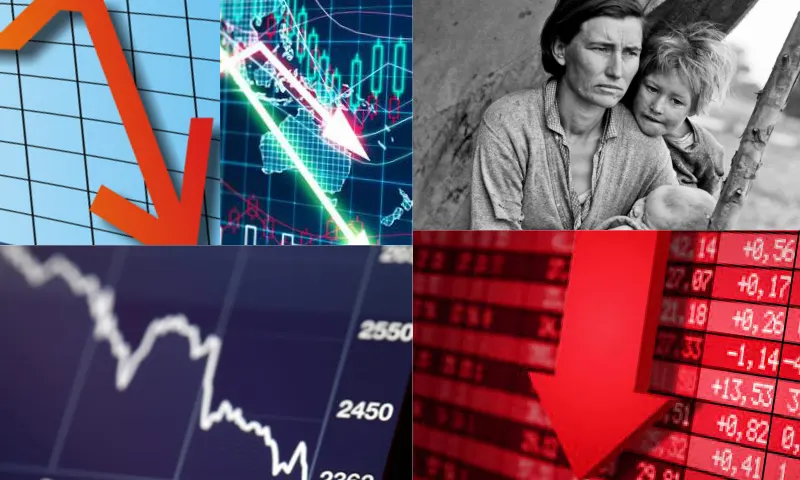
Economic Crises Experienced in the World
Although the economies of countries are of concern only to themselves; due to common activities and their interdependencies, they concern the whole world. Economic crises, due to global foreign trade connections, concern everyone. In a globalizing world, markets acting almost in unison now create interdependence. Economic crises experienced in the world until today have stemmed from wars in the beginning and later from foreign trade and policies.
1929 World Economic Crisis (The Great Depression)
This was a crisis that arose as a result of World War I. The economic problems of European countries after the war, their monetary systems, the gold reserve emission system, and the printing of unbacked currency became the starting point of the crisis. This crisis, which engulfed the world, left millions jobless and halted production.
The 1948 Crisis; The starting point was the conscription of people in World War II and the allocation of state expenditures to defense costs. The arms race, and the lack of funds allocated to production and agriculture, led to a decrease in national incomes.
The 1974 Oil Crisis; It began when OPEC, after the devaluation of the dollar as a result of the US abandoning the printing of its currency against gold, declared that oil, which was traded in dollars, would be traded against gold. Oil prices rose by up to 4 times.
The 1978 Crisis; The total debt consisting of loans between states increased.
The 1997 Asian Crisis; The crisis originated in Thailand. Its spread to countries like the Far East and Russia caused the crisis to spread worldwide. It grew as a result of the lack of a proper financial rule and system for borrowing capacities, and international economic institutions remaining spectators.
The 2008 Global Economic Crisis; It emerged with problems in the housing market in the USA. It began with the collapse of the system due to banks focusing on the housing market and, especially, extending long-term housing loans with high risk and high return objectives called mortgages to middle-class consumers. Banks, acting greedily for higher profits, continued to lend by borrowing from Europe and Asia beyond their deposits. Subsequently, loan agreements began to be bought and sold in the capital market, becoming valuable securities. When loans were not repaid, those holding the securities panicked, and consumers defaulted.